





How Businesses Can Generate High-Quality Leads in 2026
In today’s competitive business environment, generating leads is no longer the biggest challenge. The real challenge is attracting high-quality leads that have a genuine interest in your products or services and are more likely to become paying customers. As digital marketing continues to evolve, businesses must adopt smarter strategies to reach the right audience and maximize their return on investment.
At Alveron Advisory Pvt. Ltd., we believe that sustainable business growth starts with a strong lead generation system. Companies that consistently generate qualified leads are able to build predictable sales pipelines, increase revenue, and strengthen their market position.
Understanding High-Quality Leads
A high-quality lead is a potential customer who matches your target audience and has a higher probability of making a purchase. These leads are not simply website visitors or social media followers. They are individuals or businesses that have shown genuine interest in your offerings and are actively seeking a solution to their problem.
For example, a business owner requesting a consultation for digital marketing services is a much higher-quality lead than someone who merely likes a social media post.
Why Lead Quality Matters More Than Lead Quantity
Many businesses focus on generating as many leads as possible. While large numbers may seem impressive, they often result in wasted time, higher advertising costs, and lower conversion rates.
A smaller number of highly qualified leads can deliver significantly better results than thousands of unqualified prospects. When your sales team spends time speaking with people who genuinely need your services, conversions become easier and customer acquisition costs decrease.
This is why modern businesses are shifting their focus from lead volume to lead quality.
The Most Effective Lead Generation Channels in 2026
Digital marketing offers numerous opportunities to connect with potential customers. However, not every channel works equally well for every business. The most successful companies focus on platforms where their ideal customers are already active.
Search Engine Marketing
When potential customers search online for solutions, they often have a strong purchase intent. Appearing in search results through Google Ads and search engine optimization can help businesses attract highly relevant leads.
A person searching for a service is usually much closer to making a buying decision than someone who casually encounters an advertisement.
Social Media Advertising
Platforms such as Facebook, Instagram, and LinkedIn continue to be powerful lead generation tools. Advanced audience targeting allows businesses to reach specific industries, job roles, interests, and demographics.
Well-designed campaigns can generate a consistent flow of inquiries while building brand awareness at the same time.
Content Marketing
Educational content remains one of the most effective methods for building trust and attracting potential customers. Blog articles, industry insights, case studies, and guides help businesses demonstrate expertise while answering common customer questions.
Quality content not only generates leads but also improves search engine visibility over time.
The Importance of Landing Pages
Even the best advertising campaign can fail if visitors are directed to a poorly designed website.
A dedicated landing page should clearly explain the offer, highlight key benefits, and provide a simple way for visitors to take action. Whether the goal is scheduling a consultation, requesting a quote, or downloading a resource, the process should be straightforward and user-friendly.
Businesses that optimize their landing pages often see significant improvements in conversion rates.
Leveraging CRM and Automation
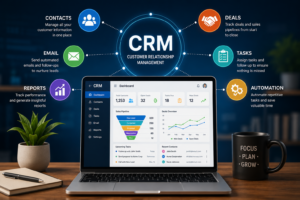
As lead volumes increase, manual follow-up becomes difficult and inefficient. Customer Relationship Management (CRM) systems help businesses organize prospects, track interactions, and maintain consistent communication.
Marketing automation tools can automatically send emails, reminders, and follow-up messages, ensuring that potential customers remain engaged throughout the sales process.
This reduces missed opportunities and allows sales teams to focus on closing deals rather than administrative tasks.
Common Lead Generation Mistakes
Many businesses struggle with lead generation because they make avoidable mistakes. Some of the most common include:
- Targeting the wrong audience.
- Running advertisements without proper tracking.
- Using generic messaging that fails to address customer needs.
- Neglecting follow-up communication.
- Focusing on lead quantity instead of lead quality.
Avoiding these mistakes can dramatically improve campaign performance and overall marketing efficiency.
Building a Sustainable Growth Strategy
Lead generation should not be viewed as a one-time activity. The most successful businesses treat it as an ongoing process that continuously evolves based on customer behavior, market trends, and performance data.
Regular testing, audience refinement, and performance analysis help businesses improve results over time. Companies that consistently optimize their marketing efforts gain a competitive advantage and create long-term growth opportunities.